
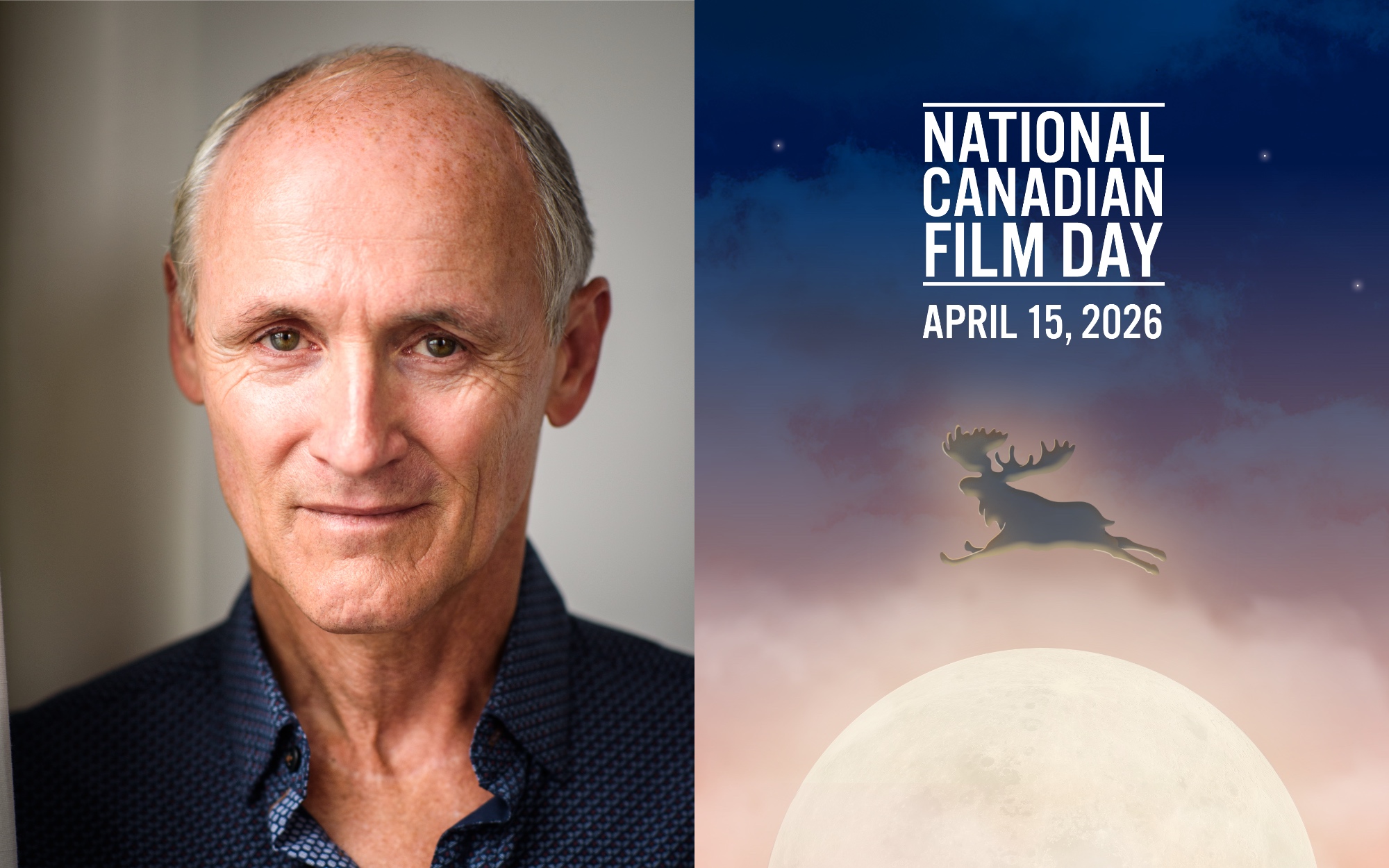
Colm Feore is one of our greatest living Canadian actors. While not as high profile as the likes of either of the Canadian Ryans, he has worked steadily and extensively both here at home and in the United States. You may remember him from roles such as Dr. Malcolm Walsh (who took both Nicolas Cage and John Travolta’s faces off) or Sir Reginald Hargreeves (the patriarch of the Umbrella Academy), or Laufey (Loki’s father in the Marvel Cinematic Universe), or perhaps something closer to home like his lead role in 32 Short Films About Glenn Gould, Trudeau, Bon Cop, Bad Cop, or his Canadian Screen Award winning turn in Sugar Daddy.
No matter where you know him from, you do know him, and I had the great pleasure of sitting down with him this week to speak about National Canadian Film Day, the Canadian film industry and culture writ large, and about being an actor who feels both a want and responsibility to return home and give back as a performer.
Matthew Simpson: Mr. Feore, welcome and thank you for joining me today. How are you doing in the lead up to National Canadian Film Day?
Colm Feore: Well, I’m very excited! It’s going well, we’re looking to get to over 2000 screens here in Canada and around the world. And people are excited about it. People are talking about it, and I’m very excited to talk to you about it.
Matthew: Excellent! How did you get involved this year?
Colm: Oh, well, I’ve been on the Board of Reel Canada for a long time. Can’t quite remember how many years, but many, many, many years. And so this is just another of my national Canadian film days, but I’ve seen the value of it intimately and up close. A couple of years ago, we actually took two films to Rideau Hall at the invitation of the Governor General, and we played a French one and an English one, and then mixed everybody together in a kind of cocktail party after the fact to talk about film, talk about being Canadian, talking about being in Canada, and you saw this extraordinary engagement with these Canadian stories, which people claim were their stories.
One of the movies was made by an immigrant from Vietnam and somebody from North Africa said, “no, no, that’s my story”, and somebody else said, “No, that’s my story”. So for those of us who were putting it on and supporting the idea it was deeply moving, and when you see that kind of impact that this day can have just by showing a few movies, it’s pretty darn cool.
Matthew Simpson: That is super cool. I feel like Canadian film is on the verge of having a moment in a way that we maybe haven’t in a while. Would you agree with that?
Colm: Well, I hope you’re right, and I do! I mean, we’re getting more attention, and we’re doing so much with so little, and that’s one of our biggest problems. Which is why I think how National Canadian Film Day was born to celebrate all that we do, because we don’t have enough money to advertise it. In the grand scheme of Marvel movies, we just don’t have that kind of money, and we never will, but we’re telling stories that have an impact personally on people that actually say “Yeah, I live there. I know that place. Those are my people”.
I believe that what’s happening now is on the shoulders of the the François Girards, the Atom Egoyans, etc, etc, we have new Canadian filmmakers who are emboldened and confident enough to say, “Hey, my idea is as good as anybody else’s, and I can make it for pennies because I have a lot of talented friends, and I know how a camera works”, and so that’s kind of what’s happening now, and it’s amazing.
Matthew: That is amazing, actually. You mentioned the stories from Vietnam and people from North Africa claiming those stories, and people from here, claiming those stories. What in your opinion, makes a Canadian film, a Canadian film? Outside of just financing, what makes a Canadian film?
Colm: Well I think the financing element is, is critical in so far as if you want to write a good sonnet, you’ve only so many lines, right? The limitations put on us actually encourage a greater imaginative effort. We try harder because we don’t have millions and millions of dollars to waste on stuff, we need to be right the first time and so often what makes a Canadian film, to me so moving is that the intelligence and the imagination has gone into the building blocks of the thing.
The script is going to be remarkable, the cinematography is going to be clean, it’s going to be straightforward. Nothing going to be…we’re not flying helicopters all over the place, and trying to impress you with that. We’re trying to impress you with the humanity of our storytelling, and where are we from, and coast to coast to coast, we have a lot of geography to cover, we’ve got a lot of storytelling possibilities, and we’ve got a lot of people capable of telling those stories. They all say something to all of the rest of us, even though we’re from somewhere else, and that’s the trickiest thing. We are all from somewhere else. There are very few Canadians who were here 20,000 years ago, and so we have to be open to conversations like:
“What’s your story? What did you know?”
“We came from here with nothing, and what happened?”
“Somebody welcomed us, and then we helped the next person.”
“Do you have a story about that?”
“Yeah, we made a movie about it. Here it is.”
And so before you know it we’ve passed the baton and are telling our stories to each other. This is not to in any way denigrate the great, mammoth beast to the south of us, whose films are extraordinary and great fun. I’ve been in some and I’m delighted to be there, but we’re capable and willing to tell stories and to see stories on film made in a so much smaller way, a so much -dare I say- subtler way, that the very best of American Independent Film certainly achieves. We’re never going to be an entertainment giant but we are, however, going to be world famous for sending around the world stories by storytellers that are recognizably internationally famous like Atom Egoyan, François Girard, Norman Jewison, David Cronenberg, and we can say that we hve actually proven that we can do it and we deserve to be seen.
Matthew: That’s an amazing answer. I can listen to you talk about this all day. It sounds like you feel some level of responsibility towards the furtherance of Canadian film. So I have two questions I’d like to ask about that. One, one a little broad and one a little personal, but let’s start with the broader one first: I’m out west in Vancouver, so my perspective is perhaps a little distorted, but it feels like Quebec film in particular thrives in a way that English Canadian film from various regions maybe doesn’t.
How does Canadian National Film day and Reel Canada try to address that? Do you feel it’s true?
Colm: Well, listen, we embrace all Canadian film, and that includes all Canadian films out of Quebec. But you’ve touched on something that is that is very germane to the Canadian cultural experience, and that is to say that to some extent, Quebec can be seen as isolated in and of itself, supporting its cultural institutions and its cultural work. They go to see Quebec films, they watch, they show up, and they are heroic in that regard.
I have nothing but admiration for them. They were what put us over the top, with Bon Cop, Bad Cop one and two. And everything else that I’ve ever done in French or English has been massively supported by that and had a little bit harder effort trickling across the rest of the country. That’s, I think, kind of okay. We have to accept that that’s going to be slightly different. There are going to be films that will be particular to west coasters. There are going to be films are be particular to people from Calgary, Edmonton, the western style that they might find more appealing. There’s going to be a little bit of regional disparity. There’s no question.
So obviously, we’re looking for something that hits the most bases most of the time, but the Quebec question is, is a tricky one, and I think it’s one that goes on all the time. They make their money back on Quebec film. Now, they don’t make them for a lot of money, but people go to the cinemas. They’re going in fewer numbers these days, but they’re still interested, and I think part of it is there is a very protective cultural heritage thing going on there. It’s a constant discussion. Do you speak French or English in the grocery store? Can you get away with saying, “hi” or “bonjour”? What’s actually going on here? Are they legislating that kind of stuff? And how open should we be to this diversity?
So I think that for us at Reel Canada, we’ve got to be all embracing. We have a welcome mat thrown down for absolutely everyone, and we’re trying to get everybody to watch everybody else’s films, partly because chief among our interests is getting new Canadians, and those Canadians interested in English as a second language, coming to Canadian films, to tell Canadian stories. So explain that kind of world to them, and that’s going to be if they’re living in Montreal or Winnipeg French communities further west, they’re going to need those kinds of films and stories, both on television and film, and so, we want to be up to speed with that, but I won’t pretend it’s not a challenge.
Matthew: Yeah. I literally started Northern Reel as a way to talk about Canadian films specifically, and I feel like I want to figure out what we can learn from Quebec to apply to the rest of the country.
Colm: I think.. I think we have to work harder, and I think we have to make films that interest more of those people across the country who like a bit of entertainment, but also would like to see their own stories on screen, and don’t want to be talked down to, don’t want to be preached at, but say, “Hey, listen, I’m from here. This is what we do. This is how we live.” Tell that story.
And that is happening. There are filmmakers out there right now doing that, but they’re doing it for pennies, and they’re doing it slowly. And we can only hope that they come to national attention on something like National Canadian Film Day, where we can draw eyes and hearts and minds to them and say, “Hey, these people are our people, and they’re great. You should have a look at this.”
Matthew: Yeah, that’s really salient. I can stay on this all day, but I’m going to pivot very slowly to something a little more personal. You have played at least two great Canadians, Glenn Gould and Pierre Trudeau. What kind of level of responsibility do you feel in playing those kinds of roles? And is there any any others you would like to play in that sort of same vein?
Colm: I do think it’s a huge responsibility, because I believe that everybody has a certain kind of ownership of those people. Because we all knew Trudeau, many of us new Gould and we have an idea of who they are and how they behave and what their lives were like. So in order to become them, to incarnate them, I had to do an enormous amount of research, visually, sonically, physically, just to get who they were.
I’ve played a bunch of other Canadians, and there’s a long list, and I always joke that if there’s a dead Canadian and he’s famous, I’ll be playing him someday. I’m not quite there yet with some of the other Prime Ministers. It could be possible, but the bottom line is that people’s expectations are such that I will never be able to meet them.
What I discovered early on in my research and development of these roles in getting them ready –I did a lot of work on Trudeau: documentary work, anecdotal work, talking to people who knew him, listening– and bottom line was that if you got the physical part right, or sort of right, and if you got the vocal thing, I would talk to people who knew them, and they would say, “You got him. You got him right here.” This was where I knew it was him.
I remember talking to Mitchell Sharp and he said, “I closed my eyes, man, and I was back in the Cabinet Room. It was the scariest thing ever.” And it was because I found a vocal thing that was so Trudeau-ish.
I was very pleased with that. But the same thing happened with Gould. But I realized, after going to enough screenings and supporting the show and going around, nobody talked about the same moment. So I suddenly realized that the eyes through which everybody sees these characters are their own. They’re never going to be the same as everybody else’s. So I can never hope to be definitive. I can never hope to do one thing right for everybody. What I can do is the script we have and trust my research, and just play the moment, play this, play that, and that will or will not translate.
At one point, we bumped into Glenn Gould’s dad. François and I were at a screening, and I don’t know if you remember, if you’ve seen the film, but it begins with me walking in off a huge sheet of ice on the St Lawrence and it ends with me walking back across the same sheet of ice –for which may I point out, they had failed to buy winter boots, so I’m walking barefoot in some galoshes with no socks, because we were out on the shore of the St Lawrence and we had to go quickly, and it was a nightmare. It’s Canadian film, so that’s what you do– and Glenn’s dad said, “How did you know about the ice?” We asked what he was talking about? and it turns out that that was Glenn’s favorite thing. He would take the dog and walk out on Lake Simcoe and just keep going, and then an hour later, walk back.
We didn’t know anything about the ice! So suddenly, these moments of just trust that you’ve told the story right, that you’ve written the story right. And then, and then we just focus on the research and development and see if we can’t reimagine that. I said to François Girard for 32 Short Films About Glenn Gould, I’m going to do an impersonation, via a vie towards an incarnation. That is to say, I’m going to show you this impersonation, but that’s not what I’m going to be doing. I’m hoping that we get to an evocation of him, because I’ve done all the work on the physicality, all the work on the vocal stuff. Same with Trudeau; the shoulders do a certain thing, and before you know it, “just watch me“.
I use my wife as the best test of all these things when I research them. We’ll be laying in bed of an evening, and I will, in one of those various characters, ask her if she’d like to go see a movie, a film or something, and if she jumps scared, I know I’m close.
Matthew: That’s an amazing test!
Colm: No, it’s brilliant. “Oh, I what am I doing in bed with this guy? I don’t know this guy!” That’s when I know I’m beginning to know him. And so that’s the journey Matthew that I would work on to try and get these guys right.
Matthew: That’s amazing. That’s an amazing test and an amazing anecdote. Thank you for sharing it with me! I’d like to ask one last question, you’ve obviously worked extensively on both sides of the Canadian-US border, is it the same responsibility that you feel that keeps bringing you back home? Is there anything specific that keeps doing that? Because I’ve seen you recently in things like a very small role in, like, Akilla’s Escape, and you won a CSA for Sugar Daddy a couple years ago.
Colm: When you say Matthew, “a very small role in Akilla’s Escape,” what you mean is “a cameo”. <laughs> The word you’re searching for there is “cameo.” I was asked by -god rest him- the late Charles Officer who directed that, “Hey, could you drop by and play a wheelchair-ridden drug grower?” I went, “What? you thought of me?!”
But, yeah, I do. I do feel that. First of all, I have an obligation. I’ve been very, very lucky. My career has been blessed, and so and I can go back and forth across the border. You want to see Landman, with Billy Bob Thornton? That’s great. You want to see Akilla’s Escape? That’s also great. You want to see Bon Cop, Bad Cop on an airplane traveling from Montreal to Vancouver? That’s also great. If you want, you can also see the recently Oscar winning Girl Who Cried Pearls, which I did all the voices for available for free at the NFB website, which won the Oscar and is up for a CSA.
Of course I feel an obligation. I feel an obligation to give back to the place that made me, to the place that trained me. I trained here in Stratford, where I live. This theatre built me, and it built people like Bill Shatner and Christopher Plummer, Maggie Smith, Peter Ustinov, you, name it. All these brilliant people trained right here, worked right here, and come back here regularly and come back to work in cinema and television here, because they can, and because sometimes people like Taylor Sheridan subsidize that. I can say “Okay, I can work on your film for $165 why? Because Taylor’s paying more than that and that means it’s only $165 for you.” And so that’s what we do. That’s what all of us do.
There’s so many Canadian actors who are lucky enough to be able to cross borders and work, and not just America, but all over the world, and we’ve all expressed a desire to come back and help out whenever we can. I’ve done films from Megan Follows, Laura Vandervoort, anybody who asks me, I’ve done the films for. I just did one, two days ago, I was shooting in Dundas for Jonathan Wright, and it’s got a super cool film from a book that his partner wrote, and she wrote the screenplay. They’ve got a couple of wonderful young people. “We need some old, bald, white guy to play an asshole” Well, that’d be me. I’m good at that! And so there I was. That film is hopefully going to go around the world, but it’ll also be here in Canada, telling a, if not particularly Canadian story, a very Canadian, grounded story. I just did a new pilot for a show called Watcher up in North Bay, which hopefully will go, which has a hugely Indigenous centre core to its storytelling, which is absolutely appropriate for what’s going on in this country. And so, yeah, I mean, it’s just what you should do.
My thanks to Colm Feore for his time, and the incredibly insightful discussion. Look for him soon in Watcher, and right now on the US series Landman.
National Canadian Film Day is Wednesday, April 15th, 2026. Be sure to check their website, CanFilmDay.ca, to find screenings and events near you.